Skip to content
Guide 064–5 min read

Treating scoliosis without surgery: the conservative building blocks

Most children and adolescents with scoliosis do not require surgery. The choice of building block and its timing depends on the Cobb angle, the remaining growth potential, and your child's everyday life.

Three building blocks, clearly delimited

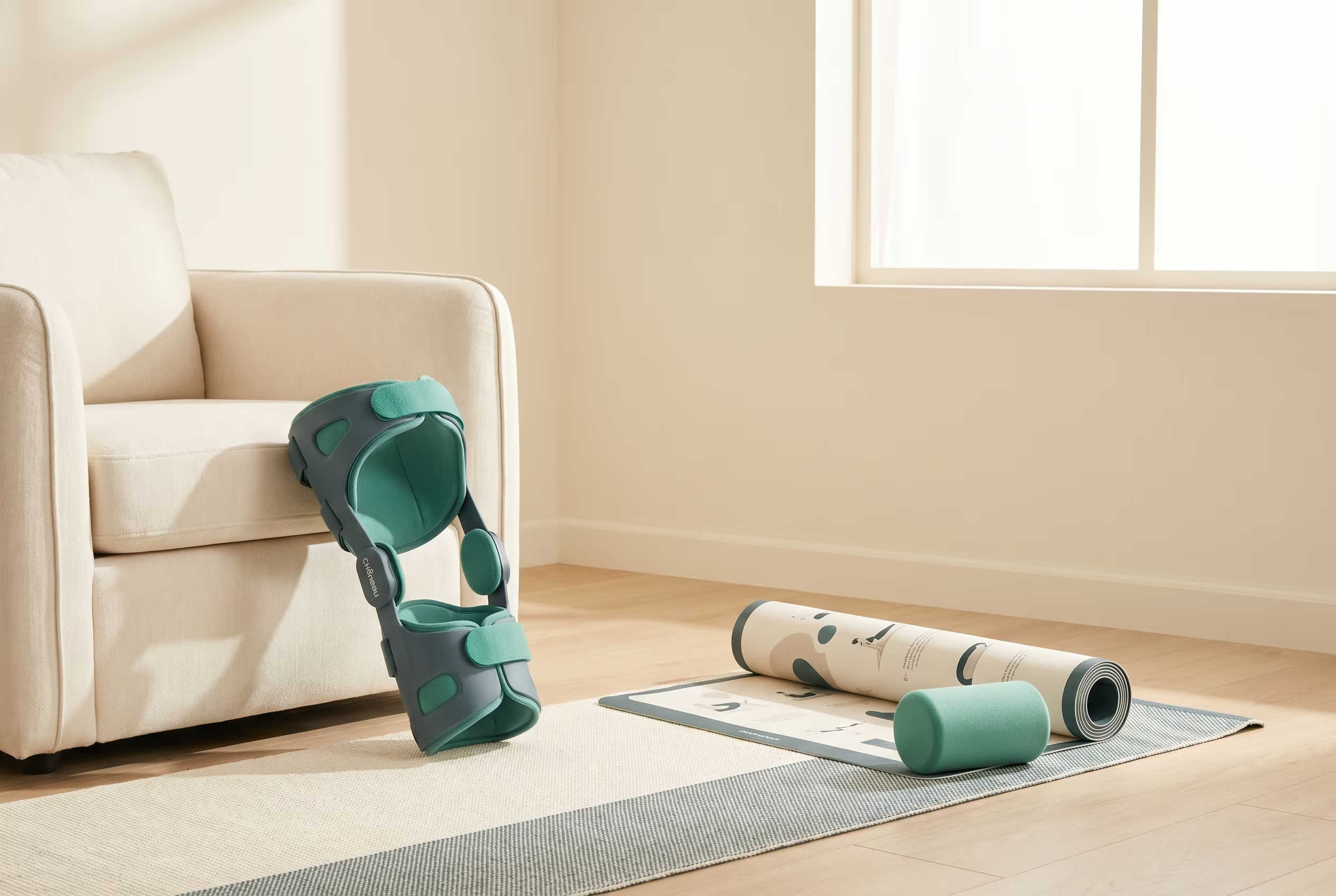
Block 1 — Observation: at Cobb under 25° thoracic and under 20° thoracolumbar/lumbar, depending on the growth stage. Not doing nothing, but active observation with clinical check-ups and scoliosis-specific physiotherapy. Block 2 — Physiotherapy: scoliosis-specific concepts such as Schroth (Schroth Best Practice), SEAS, or comparable methods. Goal: selective strengthening, self-awareness of body position, directed breathing into the concave areas, transfer into daily movement. Block 3 — Brace: from 25° to under 40° with relevant remaining growth. Cast-based or CAD/CAM, precisely fitted rigid-frame braces (for example Chêneau derivatives) with a documented in-brace primary correction of at least 40%. Wear time 20–23 hours per day; sports time counts as wear time.

Important to know

Which treatment at which Cobb angle?

Four-zone traffic-light orientation: Green — Cobb under 25° thoracic / under 20° thoracolumbar/lumbar → observation plus physiotherapy. Yellow — 25°–<40° → brace plus physiotherapy, depending on growth stage. Orange — from 40° thoracic → structured surgical consultation (consultation is not yet surgery). Red — over 50° thoracic, or over 40° thoracolumbar/lumbar → surgical indication as a rule. Additional framing that matters: beyond the pure degree, age, growth stage (Risser/Sanders, menarche), and the documented trend across multiple controls all weigh into the decision.

Brace and exercises work together — never one without the other

Limits of conservative treatment — honestly put

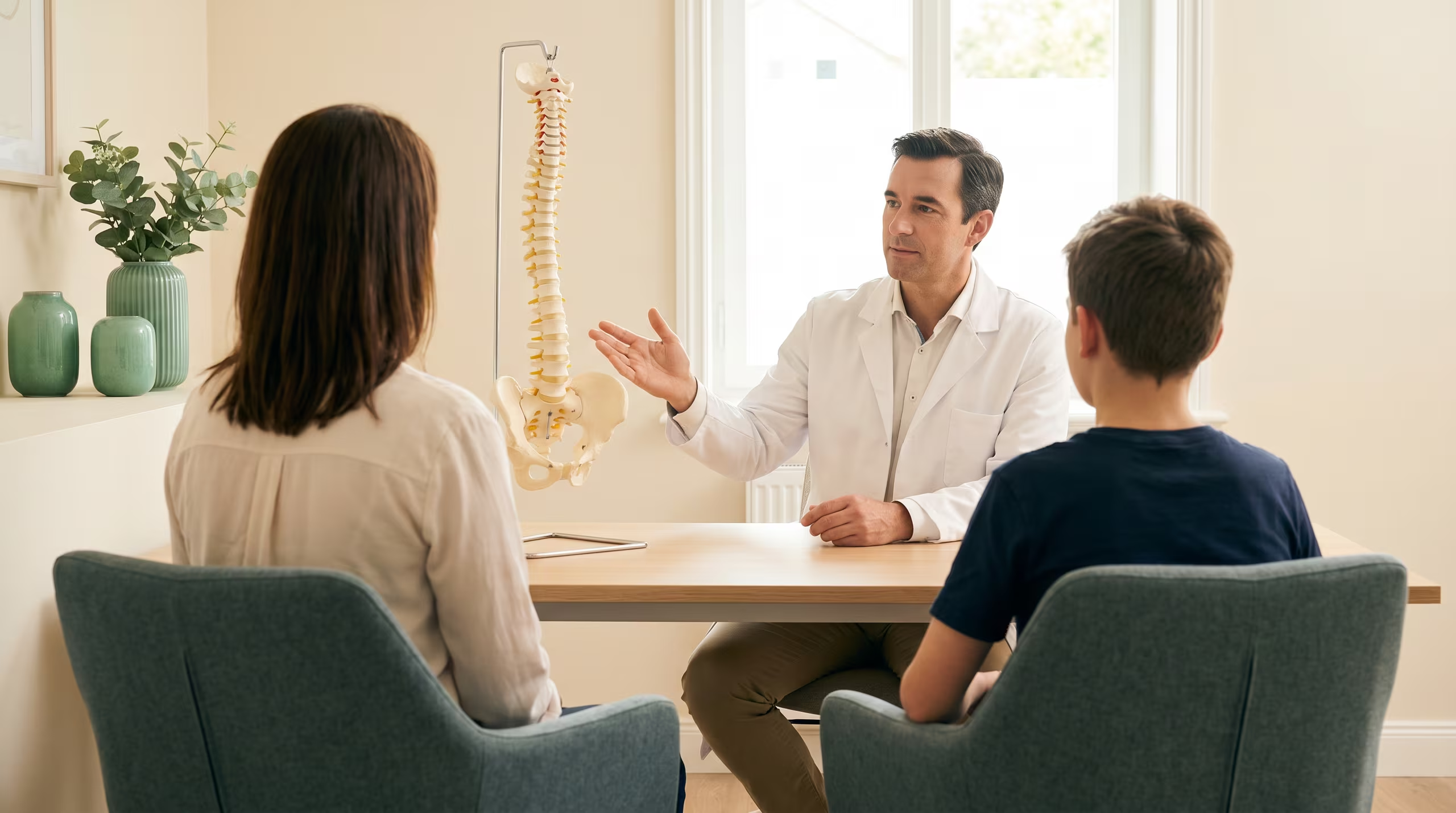
Conservative measures can slow or prevent progression, but they cannot fully reverse an existing curve. When brace and physiotherapy are consistently applied and still do not suffice, or when the Cobb angle crosses the surgical threshold, a surgical consultation is the next step — and this is not a failure but the next building block in the same structured path, sized to the actual finding rather than to a hope.

Accompanying measures — what also helps

Plenty of everyday movement, age-appropriate sport, enough sleep, normal nutrition, monitoring of vitamin D status, an ergonomic workstation for homework, and no smoking. Psychological support when the brace or the diagnosis itself becomes an emotional burden — explicitly part of good care, not an extra.

Important to know

What sensibly complements — and what does not

Osteopathy and manual therapy can ease pain and movement restrictions but do not correct Cobb degrees. Yoga, Pilates, and swimming are good general movement but do not replace scoliosis-specific physiotherapy. Be cautious of any practitioner who promises meaningful curve correction through manual techniques alone — current evidence does not support that.

For teens: directly to you

"Conservative" does not mean boring or second-best. Most people with scoliosis never get anywhere near an operating room — they go through a mix of monitoring, scoliosis-specific exercises, and, in some cases, a brace. Exercises only work if you actually do them; a brace only works if it is actually worn. Nobody is asking you to become an athlete overnight. The honest ask is: short, correct, regular practice, and — if the brace is on the table — real wear time, not just evenings. Smoking makes things worse everywhere in the body, including the spine, so keep that off the table. If the brace or the diagnosis starts to weigh on you, say so — talking helps, and there is proper psychological support available.

Your Checklist for This Topic

Three building blocks: observation → physiotherapy → brace. Observation is structured monitoring, not inaction. Physiotherapy supports but rarely corrects the curve alone. Bracing is indicated at 25° to <40° with remaining growth, 20–23 h/day, ≥40% in-brace correction. From ≥40° thoracic the conversation moves to surgical consultation. Manual therapy does not correct structural scoliosis.

If your child has a mild curve, the most important thing is reliable monitoring — not rushing into treatment. If the curve is moderate and your child is still growing, bracing with good compliance is the single most effective non-surgical option. Physiotherapy complements bracing but does not replace it. You have time to make informed decisions — and that is exactly what structured monitoring gives you.

  1. Is my child's curve in the observation or treatment range?
  2. Would scoliosis-specific physiotherapy help at this stage?
  3. Is bracing indicated, and if so, how soon should we start?
  4. What is the goal of conservative treatment in my child's case?
  5. How will we know if conservative treatment is working?

Book a consultation at our center — we assess whether observation, physiotherapy, bracing, or a combination is right for your child's specific situation.

Book via WhatsApp

Related Guides

Sources & clinical guidelines
  • AWMF-S2kGerman AWMF-S2k Clinical Guideline "Adolescent Idiopathic Scoliosis" (registration no. 151/002), dated 15 March 2023, valid through 14 March 2028. register.awmf.org/de/leitlinien/detail/151-002
  • IQWiGInstitute for Quality and Efficiency in Health Care (IQWiG): information on full-spine X-ray radiation exposure and low-dose protocols.

02 / CONTACT

Book Your Appointment

Message us on your preferred channel. Tell us about your child — we will get back to you with next steps.