Skip to content
Guide 093–4 min read

Scoliosis in everyday life: live as normally as possible, with a few considered adjustments

A scoliosis diagnosis does not change life fundamentally; it requires a few considered adjustments. Most activities remain accessible, and active movement is itself part of the therapy.

Which sport fits?

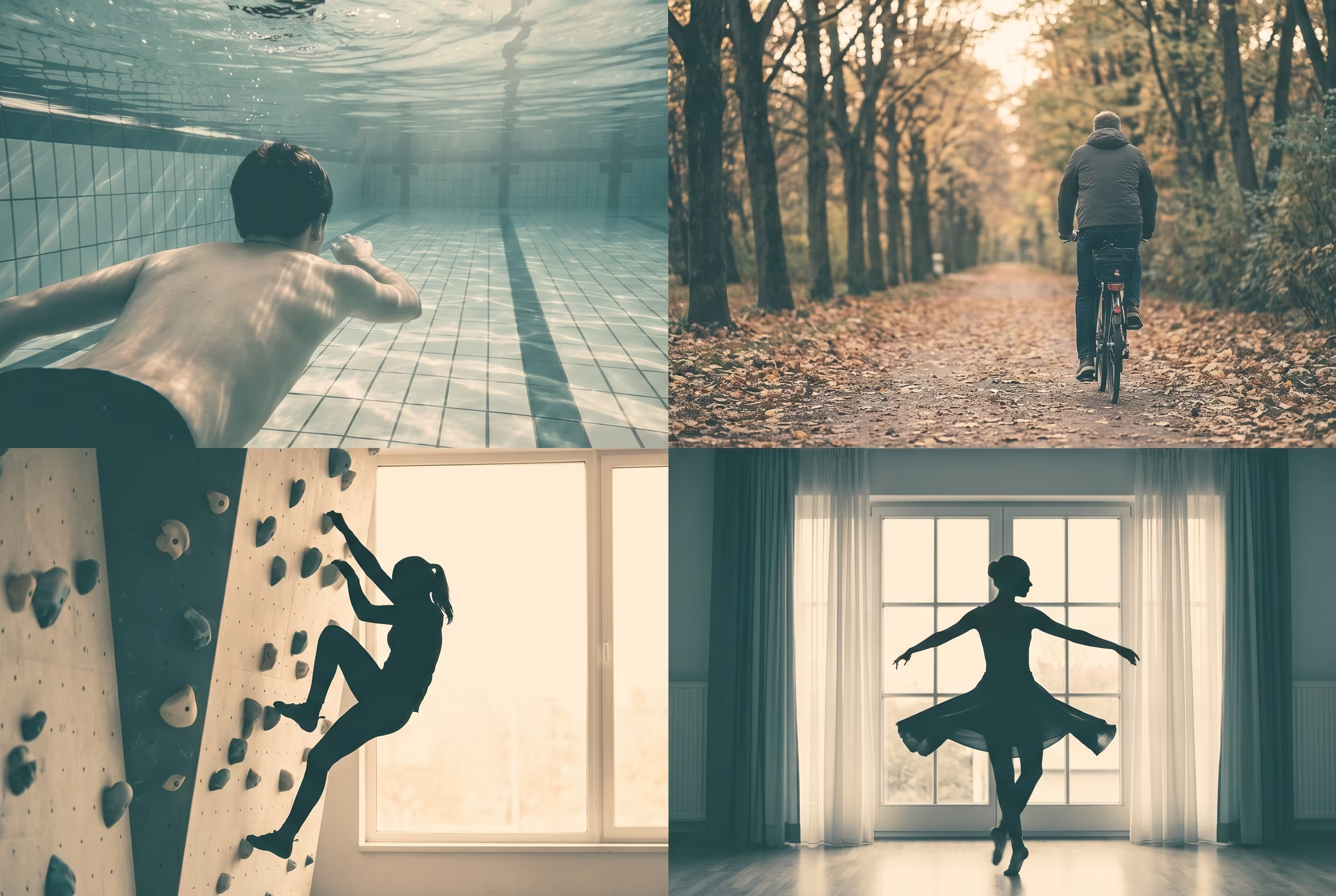
Recommended: rotation-oriented, endurance-oriented, symmetric sports — swimming, cycling, riding, climbing, athletics, ball sports at recreational level. Use judgement with: gymnastics, trampoline, extreme contact sports. During brace wear time, most sports are possible without the brace — the brace is removed for the sport session and the time counts toward the daily wear time.
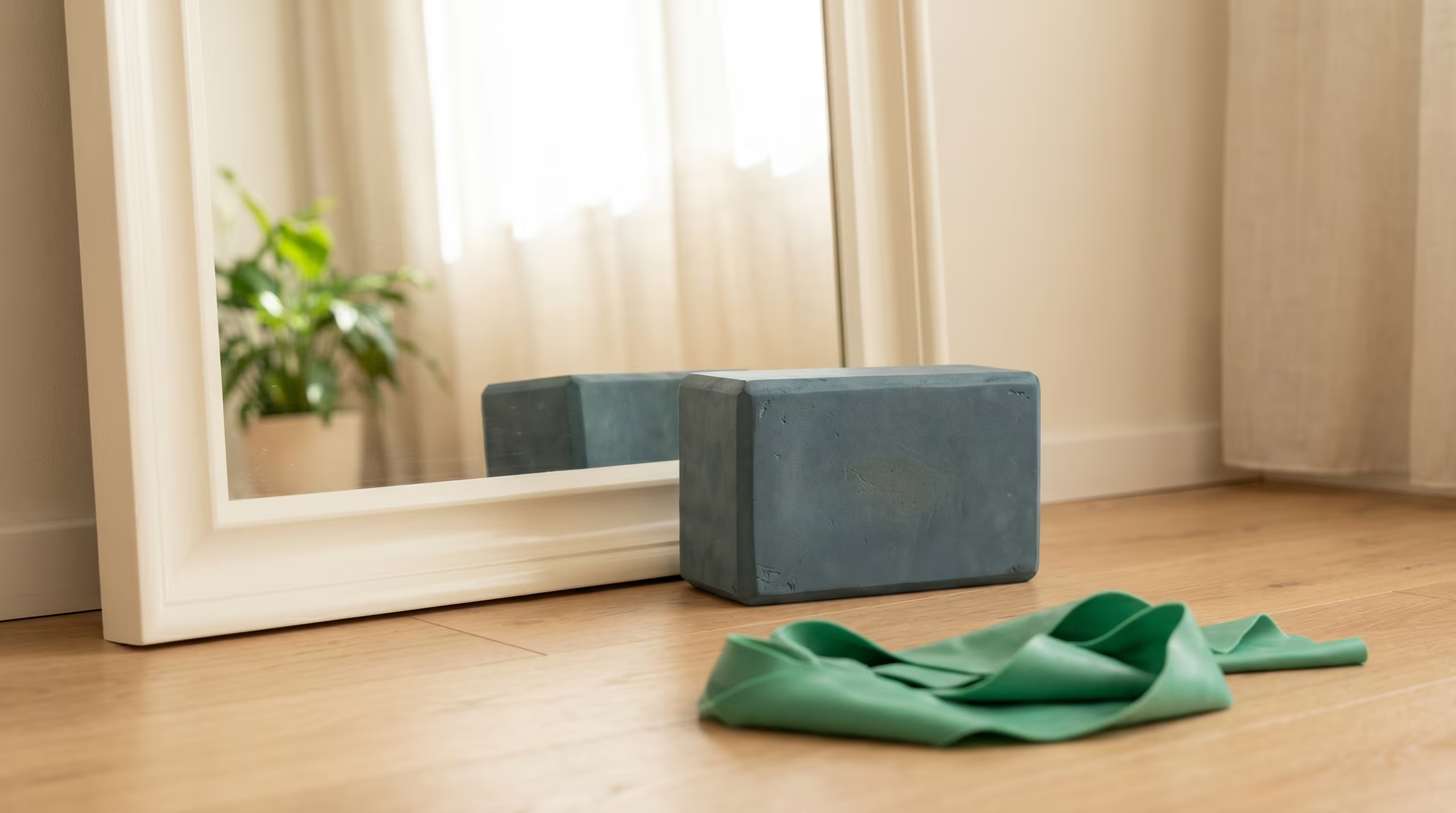
Scoliosis in school daily life

Schoolbag and backpack: as light as possible, or use a trolley bag or a school locker instead. Seating: change position often, dynamic sitting, an ergonomic chair. School sport: talk with the teacher; participation is the default, with individual exceptions during the first weeks after surgery or brace-start. Class trips are almost always possible.

Swimming, cycling, climbing, dance — most sports are encouraged

Dance, riding, music — does it work?

Yes, almost always. More important than the activity itself is the posture during the activity. Dance and riding are good; musical instruments with one-sided loading (for example violin or guitar) can be combined with posture exercises. At home: plenty of core stability, no rigid sitting.

The invisible side — psyche and body image

The diagnosis and the brace can burden self-image, mood, and social situations. That is normal and not a weakness. Open conversations, exchange with peers (for example online scoliosis peer groups), and where needed, child-and-adolescent psychological support. In our practice, psychological accompaniment is a regular part of care when wanted.

How parents, siblings, and friends support well

Take it seriously, do not taboo it, but also do not dramatise. Open communication about what helps and what annoys. Siblings also need attention. Partnership and friendships often deepen when the topic is spoken about openly.

Travelling with a brace or after surgery

Bring the brace along; few things are forbidden, but a spare undershirt, cooling gel, and skin-care items help. After surgery, avoid long flights in the first 6 weeks; from then on it is usually possible. Long car rides with regular breaks.

Nutrition and lifestyle — what counts, what does not

Balanced nutrition, attention to vitamin D status, enough calcium, everyday movement, no nicotine, enough sleep. There is no special "scoliosis diet".

For teens: directly to you

Short version: you get to keep your life. Sport is fine — go swim, cycle, dance, play ball, climb, lift. If you wear a brace, you take it off for the sport session, and that sport time counts toward your daily wear hours. Your backpack didn't cause this; your posture didn't cause this; it's not a punishment for anything. Some days with a brace will feel harder than others — that's normal, not a sign you're weak. Talk about it: to a parent, a friend who gets it, or a counsellor. Bodies look different in changing rooms. You are not your X-ray, and you are not your curve number. You're a person dealing with a thing, and you have options and people.

Your Checklist for This Topic

Sport is encouraged, not restricted. School bags and posture do not cause scoliosis. No sleeping position is required. Body image concerns are real and should be addressed. Mild pain is possible, severe pain is not typical AIS. Psychosocial support improves treatment compliance.

Scoliosis does not have to define your child's daily life. Sports, school, social activities — all of this continues. The adjustments are practical, not dramatic. The biggest impact is often emotional, not physical, and that is where your support as a parent matters most. Be open about it, connect with other families, and remember: your child is not "a scoliosis patient" — they are a young person who happens to have scoliosis.

  1. Are there any sports my child should avoid?
  2. How should we handle physical education at school?
  3. Is the back pain my child reports normal for scoliosis?
  4. Can you recommend a support group or peer network?
  5. How can we support our child's body image and confidence?

Talk to your doctor about practical daily life questions — we address the whole picture, not just the X-ray.

Book via WhatsApp

Related Guides

Sources & clinical guidelines
  • AWMF-S2kGerman AWMF-S2k Clinical Guideline "Adolescent Idiopathic Scoliosis" (registration no. 151/002), dated 15 March 2023, valid through 14 March 2028. register.awmf.org/de/leitlinien/detail/151-002
  • IQWiGInstitute for Quality and Efficiency in Health Care (IQWiG): information on full-spine X-ray radiation exposure and low-dose protocols.

02 / CONTACT

Book Your Appointment

Message us on your preferred channel. Tell us about your child — we will get back to you with next steps.