
Skip to content
Guide 103–4 min read

The first appointment at IIMI Institute: structured, honest, unhurried

A first appointment at IIMI Institute lasts around 60 minutes and clarifies the essentials: the current clinical picture, what has been established, and the next reasonable step. No rushed decisions, no unnecessary tests.

Flow of the first appointment

Step 1 — Conversation: concerns, history, family history, prior diagnostics. Step 2 — Clinical examination: posture, Adams test, scoliometer, mobility, neurological baseline status, maturity signs. Step 3 — Review of imaging brought in, or — if warranted — indication for a new X-ray. Step 4 — Structured explanation conversation: Cobb angle, risk, options. Step 5 — Written report including recommendation and control interval.

What to bring

Existing X-ray or MRI images (as CD, printout, or digital upload). Medical reports and doctor's letters from the last 2 years. List of current medications and allergies. Vaccination passport and child-examination booklet (German U1–U9/J1 series or local equivalent). Details on menarche, growth spurts, height recorded every 3 months if known. Prior brace or physiotherapy experience. A list of family questions.

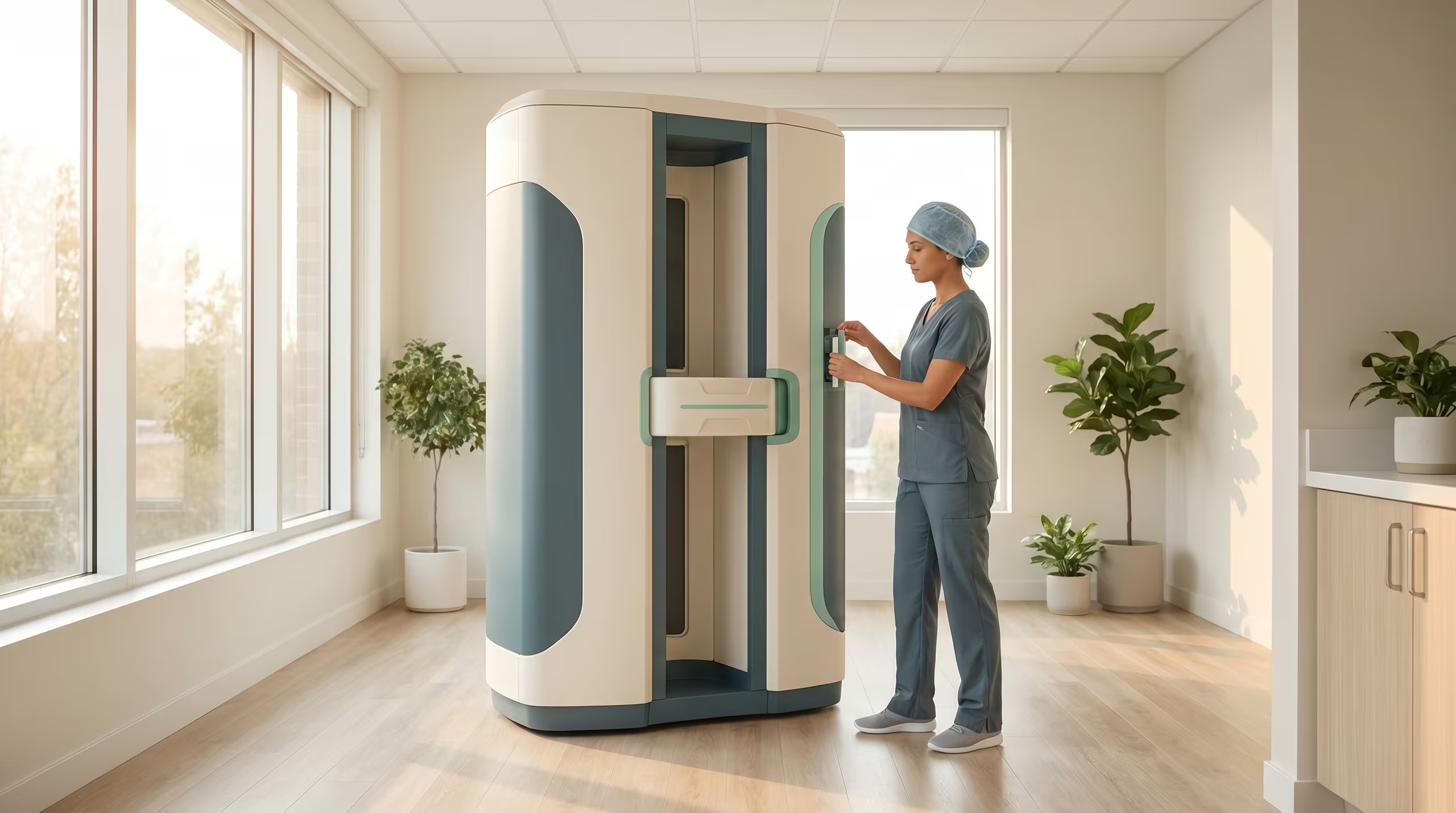
Our intake room — calm, unhurried, designed for a real conversation
Important to know

A second opinion is welcome

We offer structured second opinions on brace and surgical recommendations. You bring the existing documentation; we provide a detailed written assessment with all reasoning. The goal is not to compete with a prior opinion — it is to give a family, at a major decision point, a clear second voice based on the same data.

How to book an appointment

Contact us via the form with the child's name, date of birth, the concern in a short paragraph, any existing diagnostics, and a preferred window for the appointment. Alternatively by phone or email. Our usual response time is within two working days. Remote second-opinion assessments are available for families travelling from abroad — you send the imaging and documentation, and receive a written evaluation with clear recommendations.

For teens: directly to you

If you're coming in for the first time — a few useful things. The appointment is about an hour. You'll talk, you'll move, a doctor will look at your back, there might be a quick measurement with a small device. If there's a reason to take an X-ray, they'll explain it before doing it. You'll leave with a written report — not a verbal "let me tell you" — so nothing important has to live only in your head. You can bring a parent, bring a friend, or come alone; that's your call. If you want to ask something and you don't want to ask in front of your parent, say so — most places will give you the space.

Your Checklist for This Topic

Bring X-rays, growth data, and 5–10 questions. The exam includes scoliometer, neurological check, and growth assessment. Ask about Cobb angle, growth remaining, and treatment plan at every visit. A second opinion is always reasonable when surgery is discussed. Remote assessments are available for families from abroad.

The first appointment is your foundation. Coming prepared means you leave with clear answers, not more questions. If surgery enters the conversation, a second opinion is not optional — it is responsible. And remember: a good doctor will never rush you into a decision. You have the right to understand everything, ask anything, and take the time you need.

  1. Based on all the findings, what is your overall assessment?
  2. What is the recommended treatment and why?
  3. What happens if we wait and monitor for now?
  4. Would you recommend we get a second opinion?
  5. Can we do a remote assessment if we're traveling from abroad?

Book your first appointment or request a remote second opinion at our center — we review your child's complete case and give you a clear, independent assessment.

Book via WhatsApp

Related Guides

Sources & clinical guidelines
  • AWMF-S2kGerman AWMF-S2k Clinical Guideline "Adolescent Idiopathic Scoliosis" (registration no. 151/002), dated 15 March 2023, valid through 14 March 2028. register.awmf.org/de/leitlinien/detail/151-002
  • IQWiGInstitute for Quality and Efficiency in Health Care (IQWiG): information on full-spine X-ray radiation exposure and low-dose protocols.

02 / CONTACT

Book Your Appointment

Message us on your preferred channel. Tell us about your child — we will get back to you with next steps.