
Skip to content
Guide 084–6 min read

Scoliosis operation: the structured path through the procedure

A scoliosis operation is a plannable procedure with clearly defined phases. The better your family understands the sequence, the calmer the preparation becomes.

Preparation — what to settle before surgery

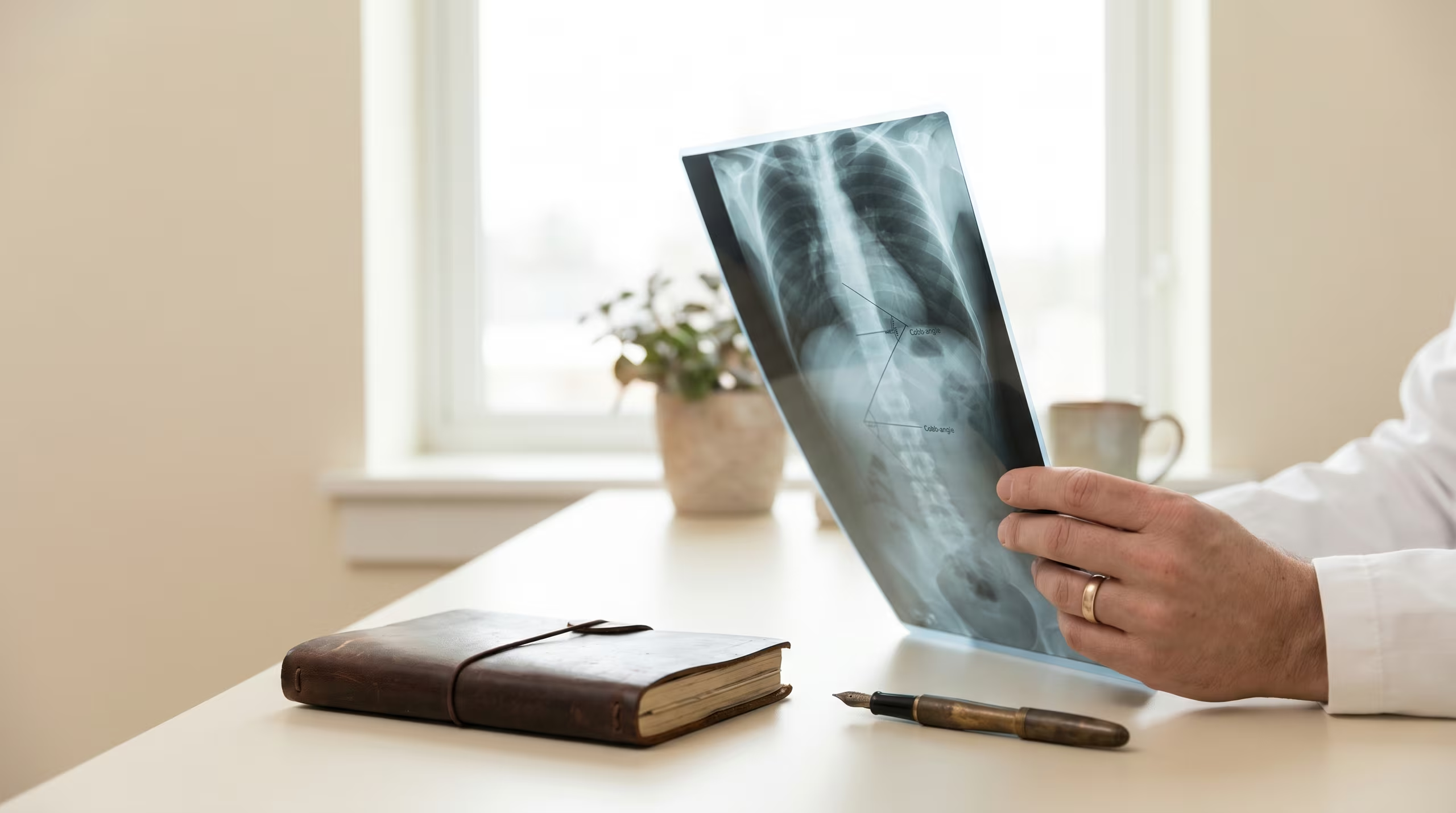
An anaesthesia consultation, a full-spine X-ray and an MRI where needed, lung-function testing with large curves, blood-typing and possibly autologous blood planning, vaccination status, iron-level check, and general physical fitness. At home: a firm bed, a stool for the toilet and shower, comfortable clothing with a front zipper, and time-off arrangements with school and (for parents) employer. Going in prepared cuts surprises dramatically.
The operation step by step

Induction of anaesthesia, prone positioning, intraoperative neuromonitoring started and kept running, a midline skin incision along the back, placement of pedicle screws, stepwise correction of the curve over titanium rods, where necessary removal of small bone areas for better alignment, insertion of a wound drain, and closure. For VBT an alternative approach is used via the thorax with a cord/tether system. For adolescent idiopathic scoliosis, instrumented posterior spinal fusion (spondylodesis) is the gold standard; the goal is a safe, balanced correction, not a geometrically perfect spine. Typical duration 4–6 hours depending on curve complexity.

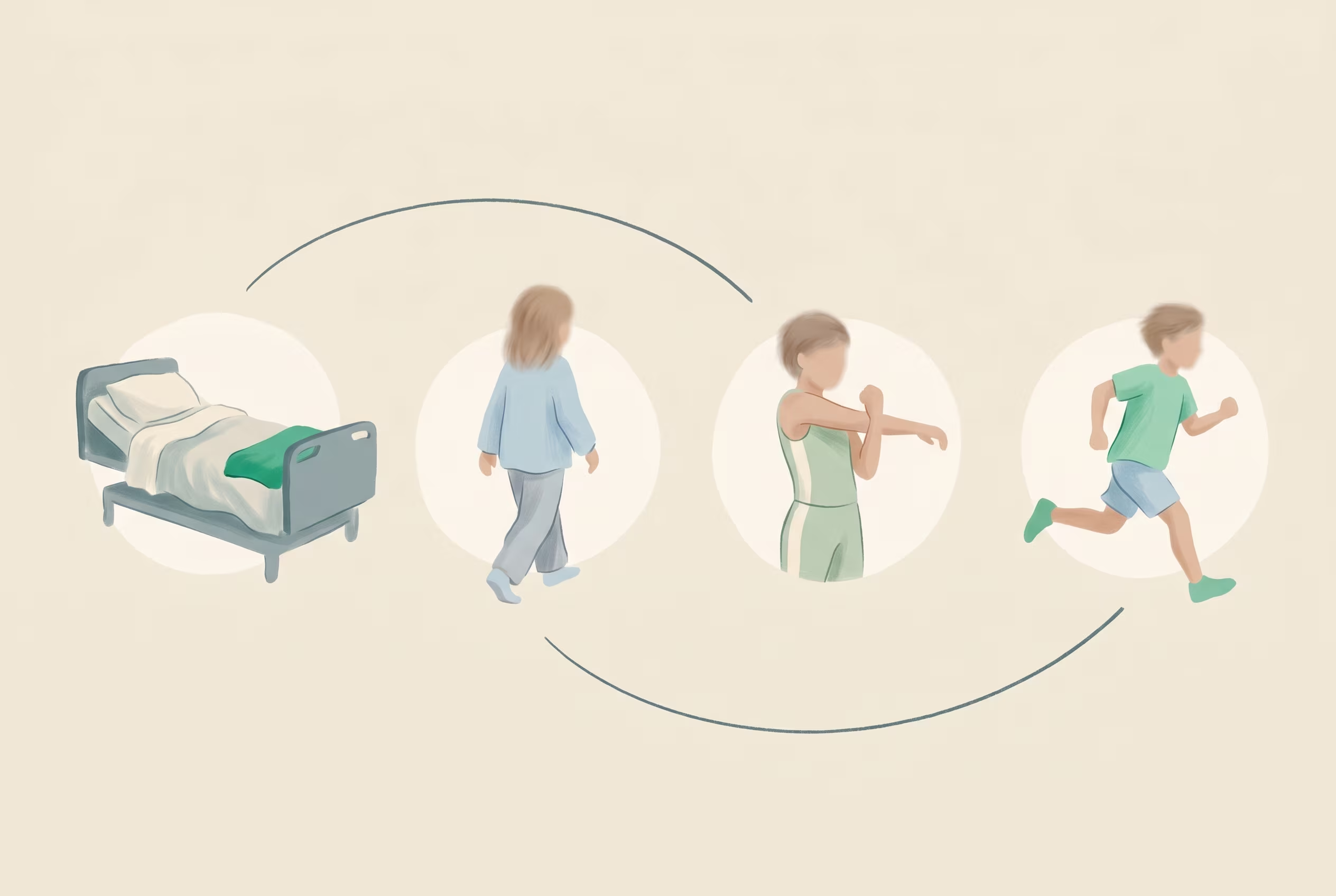
Recovery, step by step — from hospital to running

Intraoperative neuromonitoring (IONM)

During the entire surgery, nerve function is continuously monitored using intraoperative neuromonitoring (IONM). This technology tracks the spinal cord and nerve root function in real time, allowing the surgical team to detect any neurological changes immediately and respond. IONM has significantly improved the safety of spinal deformity surgery and is considered standard of care.

Hospital stay — the first days

Day 0–1: monitored care, structured pain management, checks of circulation and neurological status. Day 2–3: getting up with physiotherapy support, wound and drain care, stepwise mobilisation. Day 4–7: walking, managing stairs, switch to oral pain medication, discharge planning and instructions for the family at home. Total stay is usually 7–10 days, depending on the individual course and rehabilitation fitness. Pain management is structured and proactive — no child should be in uncontrolled pain.

At home — the first six weeks

Calm activity, walks, light stairs; no heavy lifting, no sport, no twisting-and-turning movements. Pain medication on plan, regular wound checks, a physiotherapist either visiting at home or seen at the practice. Back-related breathing and strengthening exercises are begun very gently. The rhythm is slow on purpose — the fusion needs time to consolidate.

Return to school

Return to school usually begins around 4–6 weeks, initially with shorter days. Gym and school sport stay suspended at first; non-contact playground activity without jumping is usually fine. Teachers are informed; a trolley bag or a school locker replaces the backpack during this phase.

When back to sport?

After spondylodesis: light endurance (walking, everyday cycling, swimming) usually from 6–8 weeks; no competitive sport for 3–6 months; no contact sport for 6–12 months. After VBT: individual clearance, often faster because motion is preserved. All timelines are guidance and are adjusted individually by the operating surgeon.

Long-term follow-up

Structured follow-up after surgery: at 6 weeks, 3, 6, and 12 months, then annually. Full-spine X-rays at defined intervals monitor the correction and the fusion. If new pain, unusual sensations, or any unexpected changes appear, get in touch early rather than waiting for the next scheduled visit.

Important to know

Risks — honestly explained

Infection (1–3%, usually well manageable), bleeding, neurological complications (very rare thanks to neuromonitoring, under 0.5%), implant-related issues (loosening, material irritation), pseudarthrosis (delayed fusion), and adjacent-segment issues (the segment above or below the fusion takes on more load). Every risk is discussed face-to-face for your child's specific case. The risks are always weighed against the risks of leaving a severe curve untreated — not listed in isolation.

For teens: directly to you

If it comes to an operation: yes, it is a big deal, and yes, people go through it and come out the other side living normally. The surgery itself takes about 4–6 hours and you are asleep through all of it, with continuous nerve monitoring. You will be in hospital about a week to ten days — day 0 and 1 you rest and get pain control sorted, by day 2–3 you get up with a physio, by the end of the week you are walking. The first six weeks at home are intentionally slow: no heavy lifting, no sport, no twisting. School comes back gradually from week 4–6. Sport comes back in stages over months. Nobody expects you to be an athlete on day 7. Take it one checkpoint at a time.

Your Checklist for This Topic

Posterior spinal fusion is the gold standard (4–6 hour procedure). Neuromonitoring runs continuously. Serious complications are rare in experienced centers. Hospital stay: 7–10 days (Day 0–1 monitored, Day 2–3 mobilisation, Day 4–7 walking). School in 4–6 weeks, sport timeline 6–12 months. Structured follow-up at 6 weeks, 3, 6, 12 months, then annually.

If surgery is recommended for your child, it means the curve has reached a point where conservative treatment alone cannot prevent further problems. Modern scoliosis surgery is well-established, safe in experienced hands, and most adolescents return to a full, active life. Knowing what to expect — the timeline, the recovery, the realistic outcomes — is the best preparation.

  1. How many adolescent scoliosis surgeries does your center perform per year?
  2. What correction can we realistically expect?
  3. What is the recovery timeline for my child's specific case?
  4. How is pain managed after surgery?
  5. What limitations will my child have long-term?

If surgery is being discussed, request a detailed consultation at our center — we walk you through the entire process, answer every question, and give you a clear, honest assessment.

Book via WhatsApp

Related Guides

Sources & clinical guidelines
  • AWMF-S2kGerman AWMF-S2k Clinical Guideline "Adolescent Idiopathic Scoliosis" (registration no. 151/002), dated 15 March 2023, valid through 14 March 2028. register.awmf.org/de/leitlinien/detail/151-002
  • IQWiGInstitute for Quality and Efficiency in Health Care (IQWiG): information on full-spine X-ray radiation exposure and low-dose protocols.

02 / CONTACT

Book Your Appointment

Message us on your preferred channel. Tell us about your child — we will get back to you with next steps.